Physical Address
304 North Cardinal St.
Dorchester Center, MA 02124
Physical Address
304 North Cardinal St.
Dorchester Center, MA 02124

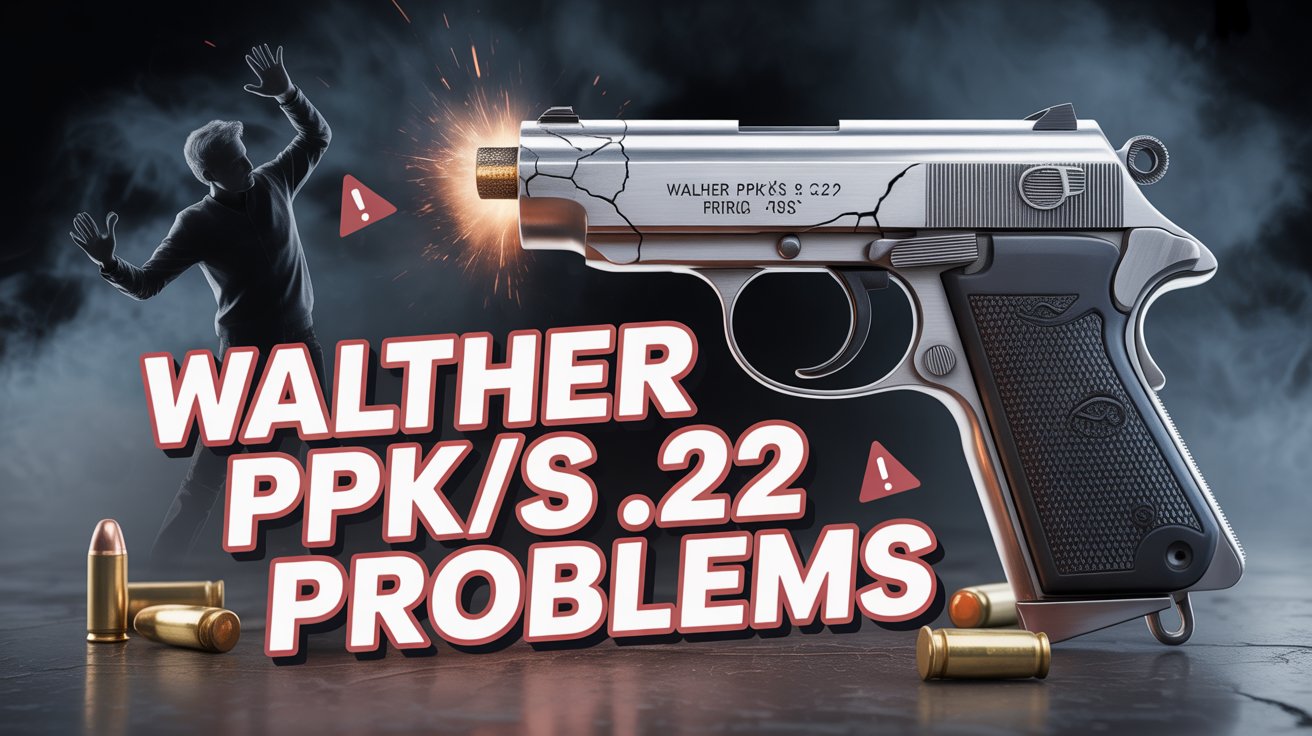
The Walther PPK/S .22 is a popular and reliable firearm, but like any tool, it can encounter issues over time.
This guide explores 10 common Walther PPK/S .22 problems you might face and provides simple fixes to keep it running smoothly.
Whether you’re new or experienced, these easy tips will help maintain its performance.
The Walther PPK/S .22 can face issues like jamming, misfires, or failure to eject casings.
Most problems stem from dirty parts, worn-out magazines, or using the wrong ammo.
Stay proactive, clean your gun regularly, check your mags, and use high-quality ammunition to keep it firing smoothly every time.

Causes
This issue often stems from the magazine. The feed lips might be dirty, bent, or out of spec, preventing the round from being positioned correctly.
A dirty feed ramp can also cause friction that stops the cartridge from sliding smoothly into the chamber.
Lastly, using low-quality or underpowered ammunition can lack the force needed to cycle the action properly.
Fixes
First, give your magazine a thorough cleaning, paying close attention to the feed lips and follower.
Next, clean the pistol’s feed ramp with a quality gun solvent and a soft brush to remove any built-up carbon or grime.
If the problem persists, try using different brands of high-velocity .22LR ammunition to see if your pistol prefers a specific type.
Read Also: 10 Common Walther Rotex RM8 Problems (With Easy Fixes)
Causes
A dirty chamber or a weak or damaged ejector is usually the culprit.
Carbon buildup in the chamber can cause the spent casing to stick, preventing the ejector from kicking it out.
An extractor claw that is dirty or worn won’t get a good grip on the rim of the casing.
Underpowered ammunition can also fail to generate enough force to push the slide back far enough to engage the ejector fully.
Fixes
Start by giving the chamber a deep clean with a chamber brush and solvent. Inspect the extractor claw for any debris or damage and clean it carefully.
If the extractor looks worn or chipped, it may need to be replaced.
Switching to a high-velocity .22LR ammunition, like CCI Mini-Mags, often provides the necessary power to cycle the action reliably.
Causes
This is frequently caused by a dirty firing pin channel, which can slow the pin’s movement.
A weak or worn-out mainspring (hammer spring) might also not provide enough force to the hammer.
Sometimes, the issue is with the ammunition itself, as some .22LR rounds have harder primers than others. Debris buildup on the breech face can also cushion the blow.
Fixes
Disassemble your slide and thoroughly clean the firing pin and its channel with a good solvent and a nylon brush to remove any accumulated grime.
If you suspect the mainspring is the issue, a gunsmith can test its strength and replace it if necessary.
Before making mechanical changes, try different brands of ammunition to rule out a bad batch of ammo.
Causes
The most common cause is a weak or dirty magazine spring that doesn’t push the follower up with enough force to engage the slide stop.
The slide stop lever itself could be dirty or have debris preventing its movement.
Additionally, underpowered ammunition may not push the slide back far enough for the slide stop to engage before the slide moves forward again.
Fixes
Disassemble and clean your magazines completely. Ensure the spring is in good condition and the follower moves freely.
Clean the slide stop lever and the area around it inside the frame.
As with other cycling issues, testing high-velocity ammunition is a good step, as it ensures the slide travels fully to the rear.
Causes
Often, this is due to an overloaded magazine. The Walther PPK/S .22 has a 10-round capacity, and forcing an 11th round in can cause issues.
Debris in the magazine well can also obstruct the magazine.
In some cases, the magazine catch itself may be dirty or have a weak spring, preventing it from engaging the magazine securely.
Fixes
Double-check that you are only loading 10 rounds into the magazine.
Use a flashlight to inspect the magazine well for any obstructions and clean it out with a brush. If the problem continues, examine the magazine catch.
Clean it and apply a small drop of lubricant. If the catch seems worn, a replacement might be needed.
Causes
The primary cause is usually a lack of lubrication or a buildup of dirt and grime in the safety mechanism.
Over time, tiny particles of carbon and unburnt powder can work their way into the small parts, causing friction.
In rare cases, a part within the mechanism could be damaged or misaligned.
Fixes
With the pistol unloaded, apply a few drops of a quality gun cleaner into the safety mechanism on both sides of the slide.
Work the safety lever back and forth several times to distribute the cleaner and break up any fouling. Follow up with a light gun oil.
If the stiffness persists, it’s best to have a qualified gunsmith inspect it.
Causes
A suppressor adds weight to the end of the barrel and increases backpressure in the system.
The standard recoil spring may not be strong enough to handle the altered slide velocity, causing feeding or ejection failures.
The increased fouling from the backpressure can also quickly dirty the action, leading to malfunctions.
Fixes
A simple fix is to ensure the pistol is exceptionally clean before shooting suppressed.
You may also need to experiment with different types of ammunition, as some perform better with suppressors than others.
If problems continue, consider installing a slightly stronger recoil spring to compensate for the changes in slide velocity caused by the suppressor.
Causes
This is almost always caused by the grip screw backing out due to the vibrations from firing.
The threads on the screw or in the frame could be worn, but this is less common.
Repeatedly tightening and loosening the screw can also wear down the threads over time.
Fixes
The easiest fix is to apply a small drop of a non-permanent, blue thread-locking compound (like Loctite 242) to the grip screw threads before tightening it.
This will hold the screw in place against vibrations but still allow you to remove it for cleaning.
Be sure not to overtighten the screw, as this can crack the plastic grips.
Causes
The most frequent cause of sudden poor accuracy is a dirty barrel. Lead and carbon fouling can build up in the rifling, affecting the bullet’s spin.
Loose sights can also shift your point of impact.
Finally, the type of ammunition can have a major impact on accuracy, as every firearm has a preference.
Fixes
Give the barrel a thorough cleaning with a quality bore solvent, a brass brush, and cleaning patches.
Check to ensure both the front and rear sights are tight and have not come loose.
Purchase several different brands and weights of .22LR ammunition and test them from a stable rest to see which one your pistol shoots best.
Causes
This is typically a mechanical issue related to the sear or hammer engagement surfaces.
These parts can become worn, chipped, or dirty, preventing a secure lock-up between the hammer and sear.
An improperly modified trigger or a weak sear spring could also be the cause.
Fixes
This is a serious issue that affects the core function of the firearm and should be addressed by a professional.
Do not attempt to file or modify the sear or hammer yourself.
Take the pistol to a qualified gunsmith to have them inspect the trigger group and replace any worn or damaged components.
High-velocity, 40-grain copper-plated round nose ammunition, such as CCI Mini-Mags or Federal AutoMatch, typically performs best and ensures reliable cycling.
It’s a good practice to clean your pistol after every trip to the range. Rimfire ammunition is notoriously dirty, and regular cleaning prevents carbon buildup that leads to malfunctions.
Yes, when properly cleaned, lubricated, and fed quality ammunition, the Walther PPK/S .22 is a reliable and enjoyable firearm for plinking and training.
It is generally not recommended to dry fire rimfire firearms, including the PPK/S .22. The firing pin can strike the edge of the chamber, potentially causing damage to the pin or the barrel. Use snap caps if you wish to practice dry firing.
The PPK/S has a direct blowback design with a relatively stiff recoil spring for its size. This can make the slide feel heavy. Ensure you have a firm grip and use a strong push-pull motion to rack it effectively.