Physical Address
304 North Cardinal St.
Dorchester Center, MA 02124
Physical Address
304 North Cardinal St.
Dorchester Center, MA 02124

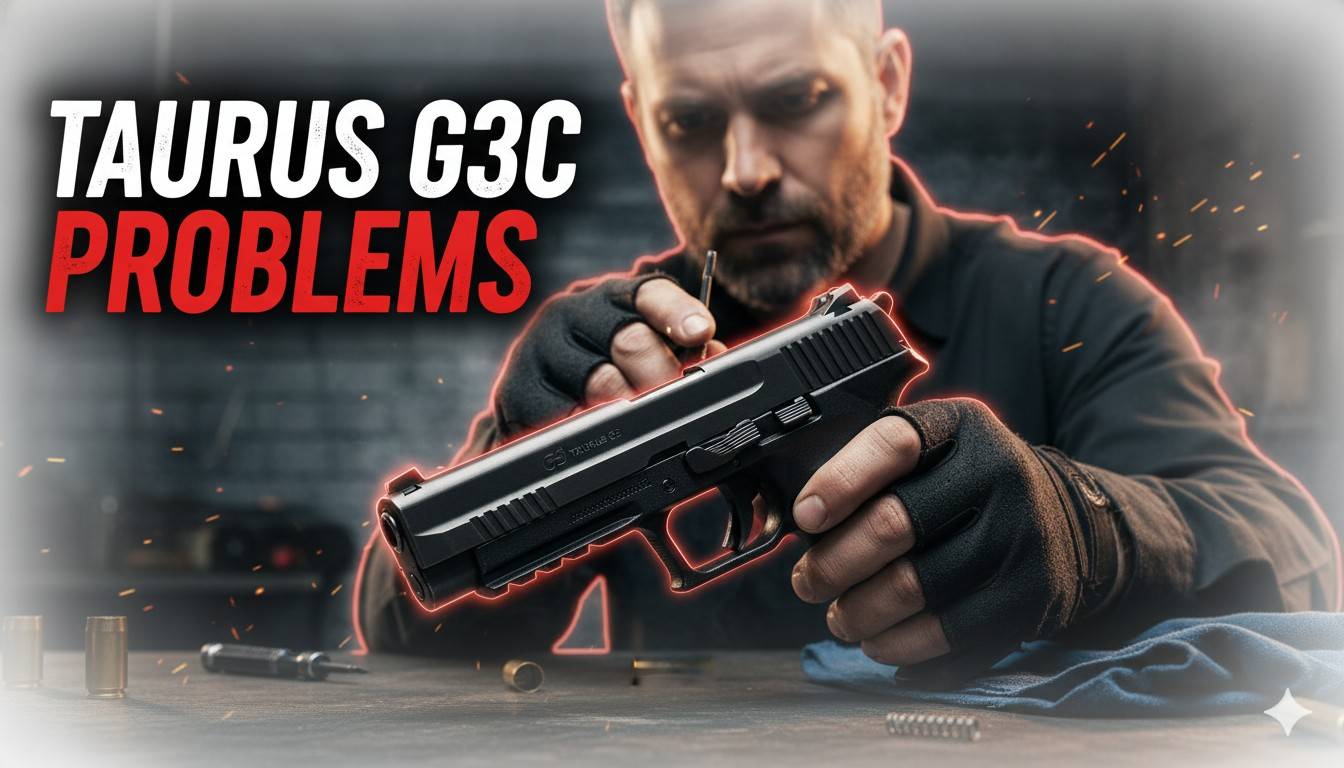
The Taurus G3c is a reliable and popular handgun, but like any firearm, it’s not without its quirks.
From jamming issues to misfiring, some Taurus G3c problems can pop up over time.
Don’t worry, though most of these issues have simple fixes! Understanding these problems will help keep your G3c performing smoothly and confidently.
The Taurus G3c can sometimes face issues like jamming, failure to eject, or light primer strikes.
These problems usually happen because of dirt, improper lubrication, or ammo choice.
By cleaning your firearm regularly and using quality ammunition, you can keep it working like a charm.
Stay proactive to ensure dependable performance!

Cause:
This issue often stems from the magazine.
The magazine lips might be too tight or improperly angled, preventing the round from being pushed up correctly.
A weak magazine spring, a dirty feed ramp, or using low-quality ammunition can also be contributing factors.
Fixes:
First, inspect and clean the feed ramp. If it’s dirty, a simple cleaning can solve the problem.
Try using a different brand of high-quality ammunition to see if that helps. If the problem persists, examine the magazine.
Sometimes, simply loading and unloading the magazine several times can help break in the spring.
If that fails, you might need to adjust the feed lips slightly or consider replacing the magazine.
Cause:
An FTE is commonly caused by a weak or dirty extractor, which fails to grip the casing rim securely.
A dirty chamber can also cause the casing to stick.
Additionally, a weak grip (limp-wristing) can prevent the slide from cycling with enough force to eject the casing properly.
Fixes:
Start by thoroughly cleaning the extractor and the chamber. Use a good quality solvent and a brush to remove any carbon buildup or debris.
Ensure you are maintaining a firm grip on the pistol when firing.
If cleaning doesn’t resolve the issue, the extractor or its spring may be worn out and require replacement by a qualified gunsmith.
Cause:
This problem is often caused by debris or thick grease in the firing pin channel, which slows the firing pin down.
A weak firing pin spring can also be the culprit.
Using ammunition with particularly hard primers can also lead to light strikes if the pistol’s spring isn’t strong enough.
Fixes:
First, give the firing pin channel a deep clean.
Disassemble the slide and use a quality gun solvent to remove any gunk or old lubricant.
If you’re comfortable doing so, remove the firing pin to clean it and the channel thoroughly.
If the problem continues, the firing pin spring might need to be replaced, which is a task best left to a gunsmith.
Cause:
The most common cause is the shooter’s grip. If your thumb accidentally rests on the slide stop lever, it can prevent the lever from engaging and locking the slide back.
It can also be a magazine-related issue, where a weak magazine spring or a worn follower fails to push the slide stop up after the last round is fired.
Fixes:
Pay close attention to your grip. Adjust your hand position to ensure your thumb is clear of the slide stop lever.
If your grip isn’t the issue, test the pistol with a different magazine to see if the problem disappears.
If it does, the original magazine’s spring or follower is likely the problem, and the magazine should be replaced.
Cause:
This is often a characteristic of the stock trigger mechanism.
While the G3c has a “restrike” capability, the reset itself can feel less defined than on other pistols.
It can be caused by the geometry of the trigger bar and other internal components. While not a malfunction, it’s a point of contention for some shooters.
Fixes:
There are several aftermarket trigger kits available that are designed to provide a crisper pull and a more tactile and audible reset.
Installing an aftermarket trigger can significantly improve the feel and performance.
However, this modification should only be performed by someone with experience or a professional gunsmith to ensure safety and proper function.
Cause:
This problem can be caused by a few things.
The shooter’s grip might be inadvertently pressing the magazine release button.
It can also be caused by a weak or damaged magazine catch within the frame of the pistol, or a worn-out notch on the magazine body itself.
Fixes:
First, adjust your grip to make sure you are not accidentally hitting the magazine release. If the issue continues, inspect the magazine catch for visible damage or wear.
Also, check the notches on your magazines. Try a new magazine to see if the problem is specific to one magazine.
If it happens with multiple magazines, the pistol’s magazine catch likely needs to be replaced.
Cause:
Corrosion is caused by moisture and sweat reacting with the metal.
Even with a protective finish, prolonged exposure without proper cleaning and maintenance can lead to rust, especially in areas with small scratches or holster wear.
The finish can also wear down more quickly in high-contact areas from holster friction.
Fixes:
Regular maintenance is key. After carrying or shooting, wipe the pistol down with a soft, dry cloth.
Apply a light coat of a quality gun oil or a corrosion inhibitor to all metal surfaces. Storing the firearm in a dry place, perhaps with a desiccant, can also help prevent rust.
For finish wear, there’s little to be done other than refinishing the slide if it becomes too severe.
Cause:
The vibration and shock from repeated firing can cause the pins to slowly work their way out of the frame.
This might indicate that the pins or the holes in the frame are slightly out of spec, leading to a loose fit.
Fixes:
If a pin starts to walk out, it can usually be pushed back into place with a small punch or tool.
For a more permanent solution, some owners apply a small amount of non-permanent (blue) thread-locker to the ends of the pins to add friction and hold them in place.
If the problem is persistent, contact Taurus customer service, as the frame may need to be inspected.
Cause:
The G3c is a compact pistol, which often means it has a stiff recoil spring to manage the recoil of powerful rounds in a small package.
This stiff spring is the primary reason the slide can be hard to operate. A new pistol will also be stiffer until it has been “broken in” with a few hundred rounds.
Fixes:
Practice your technique. Use the “push-pull” method where you push the frame forward with your dominant hand while pulling the slide back with your non-dominant hand.
You can also purchase a slide-racking assistance tool.
Over time, as you fire the pistol more and the spring breaks in, racking the slide should become easier.
Cause:
Accuracy problems can be shooter-induced, such as improper grip, poor trigger control, or flinching in anticipation of recoil.
They can also be related to the firearm itself, like misaligned sights, or the ammunition being used.
Some brands or weights of ammo will simply perform better than others in a specific gun.
Fixes:
Focus on your fundamentals. Practice dry-firing to improve your trigger control without the distraction of recoil.
Make sure your sights are properly aligned; they are adjustable for windage. Experiment with different brands and weights of ammunition to find what your G3c “likes” best.
A session with a qualified instructor can also work wonders for improving your accuracy.
Yes, the Taurus G3c is widely considered a reliable and budget-friendly option for concealed carry. Like any firearm, it requires proper maintenance and can have occasional issues, but it generally performs well.
Most manufacturers recommend firing between 200 to 500 rounds to properly break in a new pistol. This helps the moving parts settle and smooth out any rough spots.
Yes, the Taurus G3c is rated for +P ammunition. However, the manufacturer advises that using it will accelerate wear and tear on the firearm, so it should be used sparingly.
Follow the disassembly instructions in your owner’s manual. Use a quality gun cleaning solvent, brushes, and patches to clean the barrel, slide, and frame. Finish by applying a light coat of gun oil to the metal parts.
This is a personal preference. If you find the stock trigger to be mushy or the reset to be indistinct, an aftermarket trigger can be a great upgrade. However, the stock trigger is perfectly functional for most users.