Physical Address
304 North Cardinal St.
Dorchester Center, MA 02124
Physical Address
304 North Cardinal St.
Dorchester Center, MA 02124

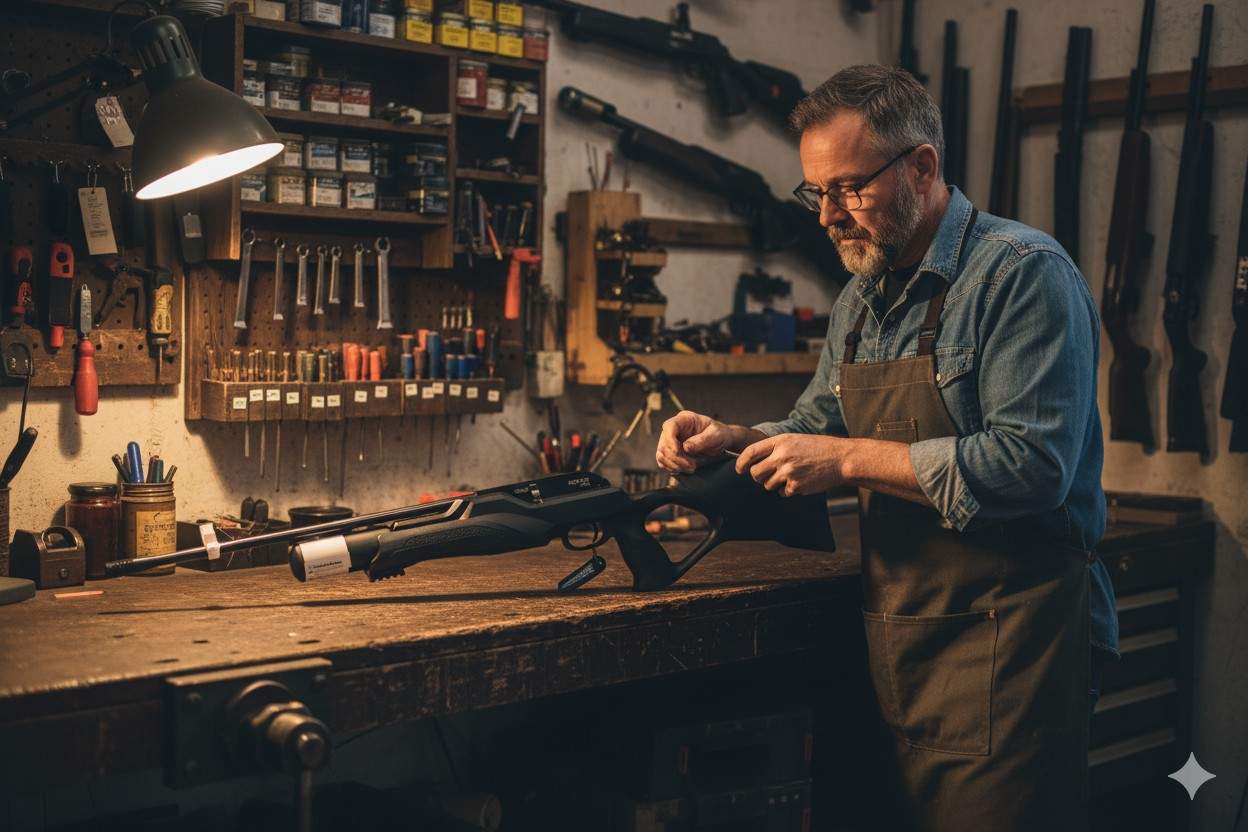
The Walther Rotex RM8 is a popular air rifle known for its performance, but like any device, it’s not without its quirks.
Understanding common Walther Rotex RM8 problems and practical fixes can save you time and frustration.
This guide simplifies troubleshooting to help you keep your air rifle in top condition with minimal hassle.
The Walther Rotex RM8 can face issues like air leaks, inconsistent accuracy, and pressure loss.
These problems might sound frustrating, but most have quick fixes, like tightening seals or cleaning the barrel.
With a little care and maintenance, you can keep your RM8 performing at its best and enjoy smooth shooting experiences.

Cause:
Inconsistent accuracy is often caused by a dirty barrel.
Over time, lead deposits from pellets build up inside the barrel’s rifling, affecting the pellet’s spin and trajectory.
Another common cause can be loose stock screws or a damaged crown (the very end of the barrel), which can disrupt the pellet as it exits.
Fixes:
First, give your barrel a thorough cleaning using a proper airgun cleaning kit with a pull-through and patches. Make sure to use a cleaning solution designed for air rifles.
Next, check that all stock screws are tightened securely, as any wobble can affect consistency. If the problem persists, carefully inspect the barrel’s crown for any nicks or burrs.
Read Also: 10 Common Glock 29 Gen 5 Problems (and Their Easy Fixes)
Cause:
This issue frequently stems from using pellets that are too long or have an irregular shape for the RM8’s magazine.
The magazine’s internal mechanism might also be dirty or lack proper lubrication, preventing it from rotating smoothly.
In some cases, the bolt probe may be misaligned, preventing it from pushing the pellet cleanly.
Fixes:
Start by trying a different brand or type of pellet, preferably a dome-headed design known to work well with the RM8.
Disassemble and clean the magazine, removing any lead debris or dirt. Apply a small amount of dry lubricant to the rotating parts.
If you suspect a bolt issue, ensure the bolt probe is clean and moves freely.
Cause:
A slow air leak is almost always due to a failing O-ring.
The Rotex RM8 has several key O-rings at the fill probe port, around the pressure gauge, and inside the firing valve that can dry out, crack, or get damaged over time.
The fill probe port is a particularly common culprit, as dirt can get introduced during filling.
Fixes:
To find the leak, you can apply a small amount of soapy water to the fill port and gauge area and look for bubbles.
Once located, the faulty O-ring must be replaced.
It’s wise to purchase a full O-ring kit for the RM8 and carefully replace the worn seal, ensuring you apply a tiny amount of silicone grease to the new one.
Cause:
Low velocity is often linked to low air pressure in the cylinder, so first ensure you have a full fill.
If the pressure is good, the problem could be a partially blocked transfer port, which restricts airflow from the valve to the pellet.
It could also be caused by hammer spring fatigue or an issue with the firing valve not opening fully.
Fixes:
First, confirm your cylinder is filled to the correct pressure (usually 232 bar). If the pressure is adequate, the next step is to check and clean the transfer port.
This may require some disassembly.
If you are not comfortable doing this, it’s best to consult a gunsmith. Inspecting and potentially replacing the hammer spring is another solution for experienced users.
Cause:
This is typically caused by a buildup of dirt, grime, and lead shavings in the bolt’s raceway and on the bolt probe itself.
A lack of proper lubrication is another major factor. Over time, this debris creates friction, making the bolt action feel unpleasant and difficult to operate.
Fixes:
The solution is a good cleaning. Use a clean cloth and a soft brush to remove all debris from the bolt, bolt probe, and the receiver where the bolt slides.
Once clean, apply a very light coat of high-quality gun oil or a dry moly lube to the bolt and its contact surfaces.
Cycle the bolt several times to distribute the lubricant evenly.
Cause:
The indexing mechanism of the RM8 is operated by the bolt action.
If the bolt isn’t pulled back fully and decisively, the mechanism may not engage properly to turn the magazine.
Dirt or debris inside the magazine well can also physically block the magazine from rotating. A worn or weak indexing spring could also be the culprit.
Fixes:
First, practice your technique: ensure you are pulling the bolt all the way back with a crisp motion.
Clean the area where the magazine sits in the breech to remove any obstructions.
If the problem continues, the indexing lever or spring within the rifle’s action may need inspection or replacement, which is a job best left to a professional.
Cause:
This is a classic symptom of an unregulated PCP rifle. While the RM8 is known for a relatively flat power curve, it is not externally regulated.
This curve is the natural result of pressure changes in the air cylinder as it empties.
An issue with the firing valve or hammer assembly can exaggerate this effect, making the “sweet spot” smaller.
Fixes:
First, learn your rifle’s “sweet spot” by shooting a full string over a chronograph. Note the shot numbers where velocity is most consistent and try to shoot within that pressure range.
For a more permanent solution, you can have an aftermarket regulator installed.
This will provide a consistent pressure for every shot, eliminating the power curve.
Cause:
An inaccurate gauge can be due to damage from an impact or a manufacturing defect.
If it’s stuck, the tiny air passage leading to the gauge may be blocked by debris or an over-tightened seal.
The internal mechanism of the gauge itself can also fail over time.
Fixes:
If the gauge is just stuck, sometimes “shocking” it by filling the rifle quickly for a brief moment can clear the blockage (use extreme caution).
However, if the gauge is faulty or inaccurate, the only reliable fix is to replace it.
This involves carefully de-gassing the rifle completely before unscrewing the old gauge and installing a new one.
Cause:
The Walther Rotex RM8 comes with a built-in sound moderator (or silencer).
The primary cause of a sudden increase in noise is the internal baffles of this moderator becoming loose, damaged, or misaligned.
Debris or lead buildup inside the moderator can also disrupt its function and increase the sound level.
Fixes:
You will need to inspect the moderator. Carefully unscrew the outer shroud to access the internal baffles.
Check for any loose parts or obvious damage. Clean out any accumulated lead dust or debris using a soft brush.
If the baffles are damaged, you may need to order a replacement baffle stack from a Walther supplier.
Cause:
This is usually caused by dirt or old, gummed-up lubricant inside the trigger assembly.
The RM8 has an adjustable two-stage trigger, and incorrect adjustments can also lead to a poor feel.
Wear on the sear engagement surfaces can also cause creep over time.
Fixes:
Start by using a can of compressed air to blow out any dust or debris from the trigger unit.
If that doesn’t work, a more thorough cleaning with an electronic parts cleaner may be needed (with the stock removed).
You can also try adjusting the trigger according to the owner’s manual, but make small, incremental changes.
If the seats are worn, they will need to be professionally polished or replaced.
Most RM8 owners report excellent accuracy with mid-weight domed pellets like the JSB Exact Diabolo, H&N Field Target Trophy, and Weihrauch F&T Special.
It’s best to test a few different types to see which one your specific barrel prefers.
There’s no single answer, but a good rule of thumb is to clean it when you notice a decline in accuracy. For most shooters, this might be every 500 to 1000 shots.
Over-cleaning can be just as bad as under-cleaning.
Yes, it is perfectly safe and recommended to store your PCP rifle with pressure in the cylinder.
This helps keep the O-rings seated and prevents dust or moisture from entering the system. Storing it empty can cause the seals to dry out.
The sweet spot is the pressure range where your rifle produces the most consistent velocity.
To find it, you need to shoot a full string of shots over a chronograph, starting from a full fill. You’ll see which shots group together with the least variation in FPS.
If you require maximum consistency for competitive shooting like field target or benchrest, then yes, a regulator is an excellent upgrade.
For general plinking and pest control, the standard unregulated performance of the RM8 is more than adequate for most users.